 admin
admin 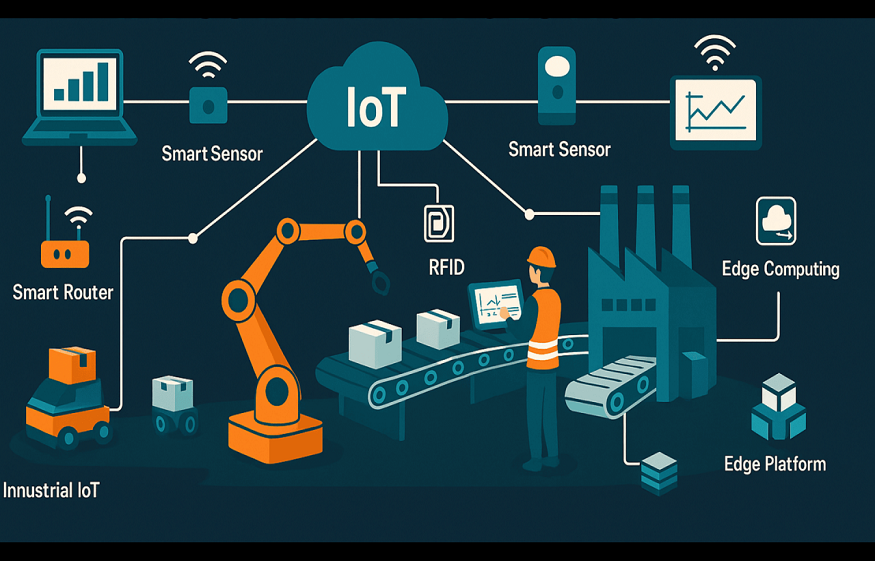
In today’s fast-evolving industrial landscape, industrial IoT and RFID integration is no longer just a futuristic concept—it’s becoming the cornerstone of efficient, data-driven manufacturing. Companies are continuously seeking ways to optimize operations, reduce waste, and enhance real-time visibility, and the convergence of IoT and RFID technologies is proving to be a game-changer. From tracking assets across complex supply chains to enabling predictive maintenance on critical machinery, this integration opens a world of possibilities for smarter industrial processes.
What is Industrial IoT and RFID Integration?
At its core, industrial IoT (IIoT) refers to the network of connected sensors, devices, and systems used in industrial environments to monitor, collect, and analyze data. When paired with RFID (Radio-Frequency Identification), which allows objects to be tagged and tracked wirelessly, businesses gain a seamless way to monitor both assets and operations in real-time. This integration creates an ecosystem where physical assets communicate with digital systems, enabling smarter decision-making and faster response times.
Read More : Social Media Marketing Experts: How They Transform Your Brand Online
Imagine a factory floor where every machine, tool, and component is equipped with RFID tags that feed data into a centralized IIoT system. This setup not only tracks the location of every item but also monitors usage patterns, maintenance schedules, and even environmental conditions like temperature and humidity. The result is a highly transparent, efficient, and predictive operational model.
Benefits of Integrating IoT and RFID in Industrial Settings
The synergy between IoT and RFID offers several tangible benefits for manufacturers and industrial operators:
1. Real-Time Asset Tracking
With RFID tags on machinery, inventory, and tools, IIoT systems can track assets in real-time, eliminating the guesswork from inventory management and ensuring that critical components are always available when needed.
2. Predictive Maintenance
Industrial IoT sensors monitor equipment health continuously. By integrating this data with RFID tracking, maintenance teams can identify potential failures before they occur, reducing downtime and extending equipment lifespan.
3. Enhanced Operational Efficiency
Automation becomes far more precise with IoT and RFID integration. Production lines can self-adjust based on real-time data, optimizing workflow and reducing bottlenecks.
4. Improved Supply Chain Visibility
RFID tags combined with IoT sensors allow companies to track products from manufacturing to delivery. This level of visibility helps identify delays, reduces theft, and enhances overall supply chain transparency.
5. Data-Driven Decision Making
Integrating these technologies creates a robust dataset that managers and engineers can use for analytics, forecasting, and strategic planning. Informed decisions based on accurate, real-time data lead to smarter operations and higher profitability.
Applications Across Industries
The versatility of industrial IoT and RFID integration is evident across multiple sectors:
- Manufacturing: Real-time monitoring of production lines, inventory management, and predictive maintenance of machinery.
- Logistics and Warehousing: Efficient asset tracking, automated inventory counts, and reduced human errors.
- Healthcare: Tracking medical equipment, patient monitoring, and ensuring compliance with regulatory standards.
- Automotive: Monitoring the assembly line, supply chain management, and quality control.
- Energy and Utilities: Monitoring equipment performance, reducing unplanned downtime, and optimizing energy consumption.
Challenges to Consider
While the benefits are substantial, integrating industrial IoT with RFID comes with challenges that organizations must address:
- Data Security: With increased connectivity comes higher vulnerability to cyber threats. Implementing secure networks and data encryption is critical.
- Integration Complexity: Connecting legacy systems with modern IoT and RFID technology can be technically challenging and may require specialized expertise.
- Cost of Deployment: Initial investment in sensors, RFID tags, and software platforms can be high, though long-term ROI often justifies the expense.
- Data Overload: Collecting vast amounts of data is only valuable if there’s a system in place to analyze and act on it effectively.
Best Practices for Successful Integration
For organizations looking to harness the power of industrial IoT and RFID integration, a strategic approach is essential:
- Start Small: Begin with a pilot project focusing on a single production line or warehouse section before scaling across the organization.
- Invest in Analytics: Ensure your IIoT platform has robust analytics tools to turn data into actionable insights.
- Prioritize Security: Implement cybersecurity measures at every stage, from RFID tags to cloud-based data platforms.
- Train Your Workforce: Staff should understand how to interact with new technologies and leverage real-time data effectively.
- Choose Scalable Solutions: Opt for IoT and RFID systems that can grow with your business needs and adapt to future technological advancements.
The Future of Industrial IoT and RFID
Looking ahead, the integration of IoT and RFID is expected to deepen, driven by trends like AI-driven predictive analytics, edge computing, and 5G connectivity. These advancements will make real-time decision-making even faster and more accurate, allowing industries to operate at unprecedented levels of efficiency and intelligence.
Read More : From Zero to Series A: The Role of a Strategic SaaS Marketing Agency
The convergence of digital and physical systems will continue to shape the “smart factory” of the future, where industrial IoT and RFID integration is the foundation for innovation, sustainability, and competitive advantage. Companies that embrace this shift today will not only improve operational performance but also position themselves as leaders in the next industrial revolution.
Final Thoughts
The era of isolated systems and manual tracking is rapidly giving way to fully connected industrial environments. By integrating IoT and RFID technologies, businesses unlock the potential for real-time insights, operational efficiency, and predictive decision-making. Whether it’s reducing downtime, improving supply chain visibility, or enabling smarter production lines, industrial IoT and RFID integration is a strategic investment that pays dividends in agility, accuracy, and profitability.
For manufacturers, logistics operators, and industrial leaders, the message is clear: the future of efficient operations is connected, intelligent, and data-driven—and it starts with integrating IoT and RFID technologies today.